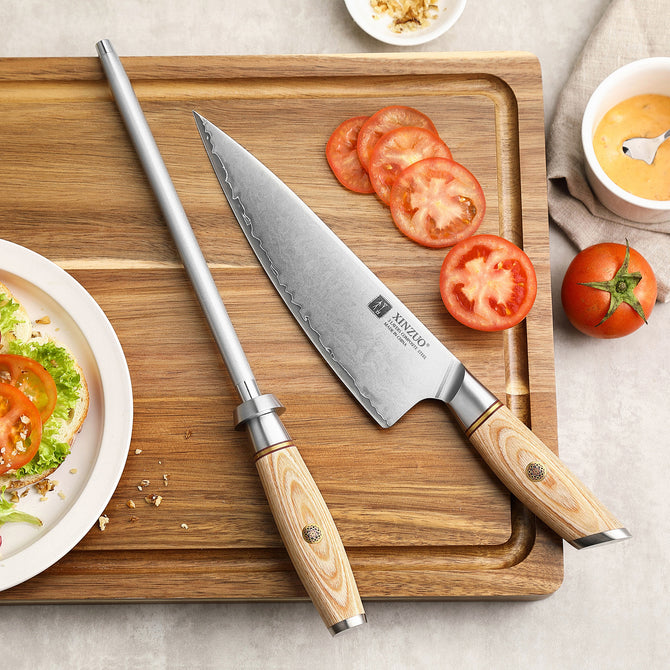
In the realm of culinary arts, the sharpness of a knife is paramount. A well-maintained, razor-sharp edge can transform not only the efficiency of food preparation but also the quality of the cooking experience. Among the essential tools for maintaining a sharp edge on your knives is the honing steel. While often confused with sharpening, honing is a distinct practice that realigns the blade rather than removing material. Understanding how to use a honing steel properly is crucial for any kitchen enthusiast or professional chef aiming to keep their knives in top condition.
Understanding the Purpose of Honing
Before delving into the technique, it is essential to distinguish between honing and sharpening. Honing is the process of aligning the microscopic teeth on the blade edge, which can bend or fold during regular use. This process is crucial for maintaining sharpness and ensuring clean cuts. Sharpening, on the other hand, involves grinding away material to create a new edge.
- Honing should be done regularly, ideally before or after each use.
- Sharpening is needed less frequently, perhaps every few months or when the knife becomes dull.
- Proper honing can extend the time between sharpenings.
The Correct Technique for Using a Honing Steel
Choosing the Right Honing Steel
Before starting, ensure your honing steel is compatible with your knives. They come in a variety of materials such as steel, ceramic, and diamond-coated. Each type has its benefits, and the choice depends on the type of knives and personal preference. Find out more about this approach by selecting the right honing rod for your needs.
Step-by-Step Honing Process
To hone your knife effectively, follow these steps:
- Hold the honing steel vertically with the tip firmly placed on a stable surface.
- Grip the knife handle securely and place the blade against the top of the steel at a 15-20 degree angle.
- Apply light pressure and draw the knife down the length of the steel and toward you, ensuring the entire blade edge makes contact.
- Repeat this motion 5-10 times for each side of the blade.
- Maintain consistency in angle and pressure for optimal results.
For more detailed techniques and expert insights, explore advanced guides and tips to refine your honing skills.
Common Mistakes to Avoid
Even seasoned chefs can make errors when honing. Here are some common mistakes and how to avoid them:
- Using too much pressure: This can damage the blade. Aim for gentle, controlled strokes.
- Incorrect angle: Maintain a consistent 15-20 degree angle to ensure effective honing.
- Honing a dull knife: Remember, honing is for alignment, not sharpening. If the blade is dull, it needs sharpening first.
For more insights on honing best practices and avoiding common pitfalls, discover expert strategies here.
Integrating Honing into Your Knife Maintenance Routine
Incorporating regular honing into your knife maintenance routine is essential for prolonging the life and performance of your knives. Here?s how to make it a habit:
- Establish a routine: Hone your knives regularly, ideally before or after each use.
- Store your honing steel in an accessible location to remind you to use it.
- Combine with proper knife storage and periodic sharpening for comprehensive maintenance.
For more on comprehensive knife care, learn about our tailored solutions to keep your culinary tools in peak condition.
By understanding and implementing the correct use of a honing steel, any kitchen enthusiast can maintain a razor-sharp edge, ensuring precision and enjoyment in every culinary endeavor.
About the Author